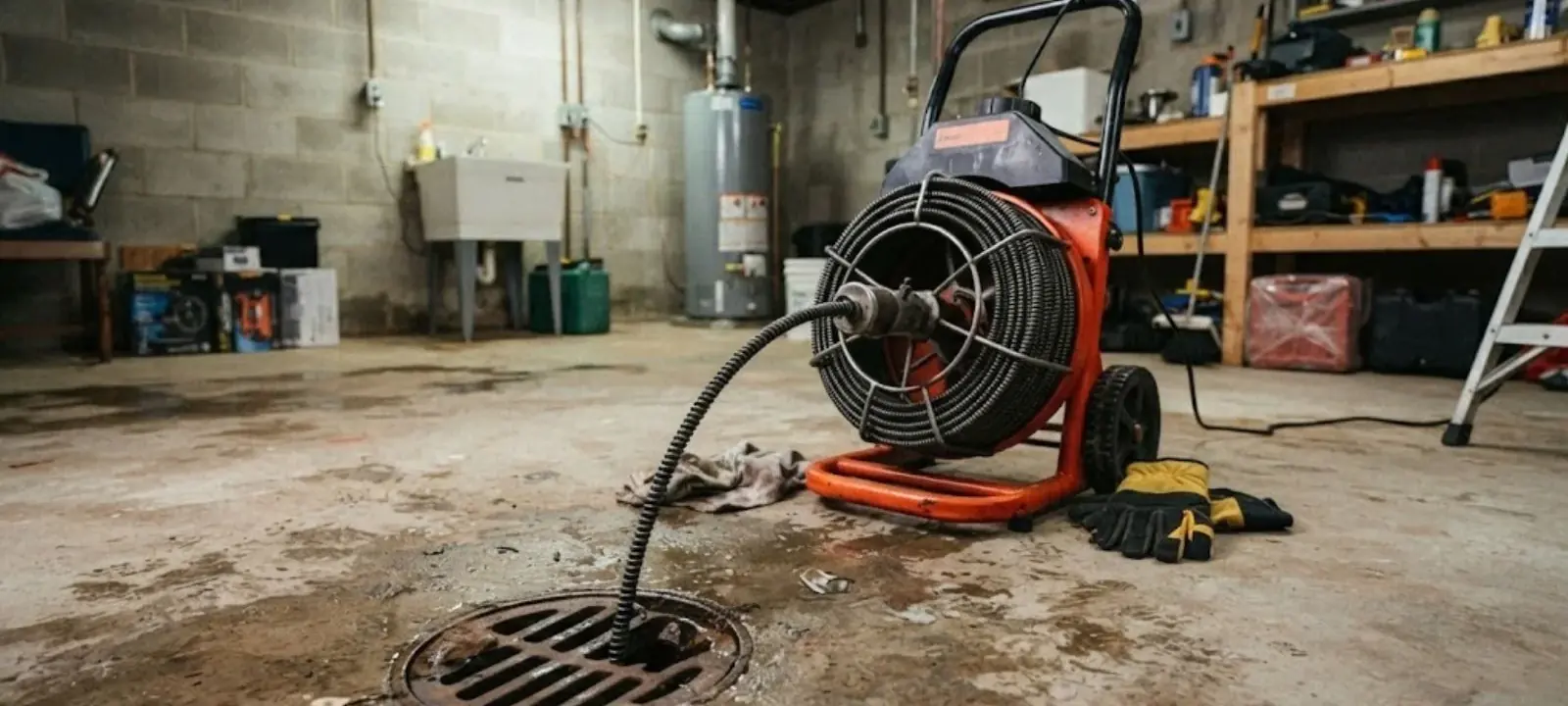
When a clogged drain is an emergency
Most clogs are an annoyance. A few are not. The difference is whether water has anywhere left to go, and whether what is coming back up is clean.
- Sewage in the lowest fixture. Dark water or a sewer smell in a shower, tub or floor drain means the main line is blocked. Stop all water use at once.
- Several fixtures slow at the same moment. One slow sink is a local clog. A slow sink, tub and toilet together point to a shared line.
- The washing machine backs up. Laundry discharges a lot of water fast. A backup there often shows the blockage sits on the branch line or the main.
- A toilet that overflows on every flush. Plunging that does nothing means the clog is beyond the trap. It needs a cable or a jetter, not more force.
- Gurgling after something else drains. Air pushed back through a trap is an early warning that the line is partly closed and may close fully.
Any of these is worth a call to the 24/7 line, even after midnight. A line that is only partly blocked at 11 p.m. is often completely blocked by morning.
Fixture clog or main line? Four ways to tell
Knowing where the blockage sits changes the tool and the price. These checks take a few minutes and give the dispatcher something useful to work with.
One fixture only
If only the kitchen sink is slow, the clog sits in that branch. A short cable run through the trap arm usually clears it.
Lowest drain first
Water that surfaces in a floor drain or ground-floor shower first points to the main line, because that is the lowest opening.
Cleanout cap
Many homes have a capped cleanout outside near the foundation. Water standing in it means the blockage is farther downstream.
Repeat clogs
A line that clears and then fails again within weeks usually has roots, a belly or grease coating that a simple cable pass leaves behind.
Kitchen sink and disposal clogs
Kitchen lines clog differently from bathroom ones. Cooking grease cools and sticks to the pipe wall, coffee grounds pack into the bend, and a disposal grinds food into a paste that settles at the first low point. A cable passes through the middle of that mass without removing the coating, so the sink drains for a week and then slows again.
If the sink is double and one side drains while the other does not, the clog sits between the two basins and the tee. If a disposal hums but the sink stays full, check garbage disposal repair before assuming the drain is the culprit. A dishwasher that leaves standing water often drains through the same disposal, so the two problems travel together.
Cable snaking or hydro jetting?
Both tools clear a blockage. They suit different problems, and the plumber picks one after hearing the symptoms.
Cable (snaking)
- Best for a single fixture clog or a fresh blockage
- Drills through the obstruction and pulls debris back
- Fast, and usually the lowest cost
- Can leave grease on the pipe wall
Hydro jetting
- Best for grease, scale and roots on a longer run
- Water at high pressure scours the whole pipe wall
- Leaves the pipe cleaner for longer
- Needs a sound pipe, so a camera look comes first
If a cable has already failed or the clog keeps returning, read about hydro jetting in Dana Point, which handles what a cable cannot.
Why older Dana Point drain lines clog again
Capistrano Beach began building out in 1925, and Lantern Village near the harbor holds many of Dana Point's oldest houses. Homes from that period commonly have their original cast iron or clay drain lines. Those materials roughen with age, shed scale into the flow and give roots an easy way in at the joints.
That is why a repeat clog on an older street deserves a look with a camera instead of another cable pass. A sewer camera inspection shows whether the problem is grease, roots or a cracked section. If the pipe itself has failed, sewer line repair replaces only the damaged stretch.
Drain line leaks are the quieter cousin of clogs. A pipe that is wet along its run, a damp patch in a slab or a sewer smell without a visible backup can mean a leak in the drain line itself, and cleaning will not fix that. The plumber will say so plainly and point you to the right repair.
Symptom, likely cause and usual fix
| Symptom | Likely cause | Usual fix |
|---|---|---|
| One sink drains slowly | Grease or hair in the trap arm | Short cable run, trap cleaning |
| Tub and shower both slow | Hair and soap in the shared branch | Cable through the tub drain |
| Toilet and floor drain gurgle together | Partial main line blockage | Main line cable or jetting |
| Clog returns within weeks | Roots, scale or a belly in the pipe | Camera look, then jetting or repair |
| Cleanout holds standing water | Blockage downstream of the house | Cable from the cleanout |
What affects the price of drain cleaning
A fair price for drain cleaning depends on where the blockage sits and what it takes to reach it. Your plumber should explain each of these before starting.
Many homeowner insurance policies pay for sudden water damage but not for a slow drain or the cost of clearing a clog itself, so check your policy before you call a claim in.
What code and which office apply
Drain work that stays on the surface, such as clearing a trap, usually needs no paperwork. Work that changes piping falls under the California Plumbing Code, which is based on the Uniform Plumbing Code (UPC). According to the City of Dana Point, permits are generally required for almost all construction, so a plumber should say whether yours is one.
Common Questions
Yes. The 24/7 line answers nights, weekends and holidays, and a licensed plumber is dispatched for sewage backups, overflowing toilets and clogs that are putting water on the floor. A slow sink at 2 a.m. is usually fine until morning, and the dispatcher will tell you honestly which situation you have.
It usually means a shared line is partly blocked. The fixtures sit on one drain branch or on the main, and the blockage is past all of them. Stop using water and call, because partial blockages tend to close completely.
Yes. A cable that stops at the same spot twice often hits a break, a heavy root mass or a joint that has shifted. The plumber can run a camera to see which, and then choose between jetting and a repair.
Chemical cleaners rarely clear a real blockage and can sit in the pipe, which makes later work harder and less safe for whoever opens the trap. If the drain is blocked enough to call about, skip the chemicals.
Yes. Tell the dispatcher you are the owner or property manager and give the service address. A clear price before work starts makes approval quick, and you can ask for photos of what was removed.
A correctly sized cable does not harm a sound pipe. On a brittle clay or cracked cast iron line, the plumber may prefer a camera first so the cable is not driven into a break.
Need an answer for your own address? Call (949) 325-3122