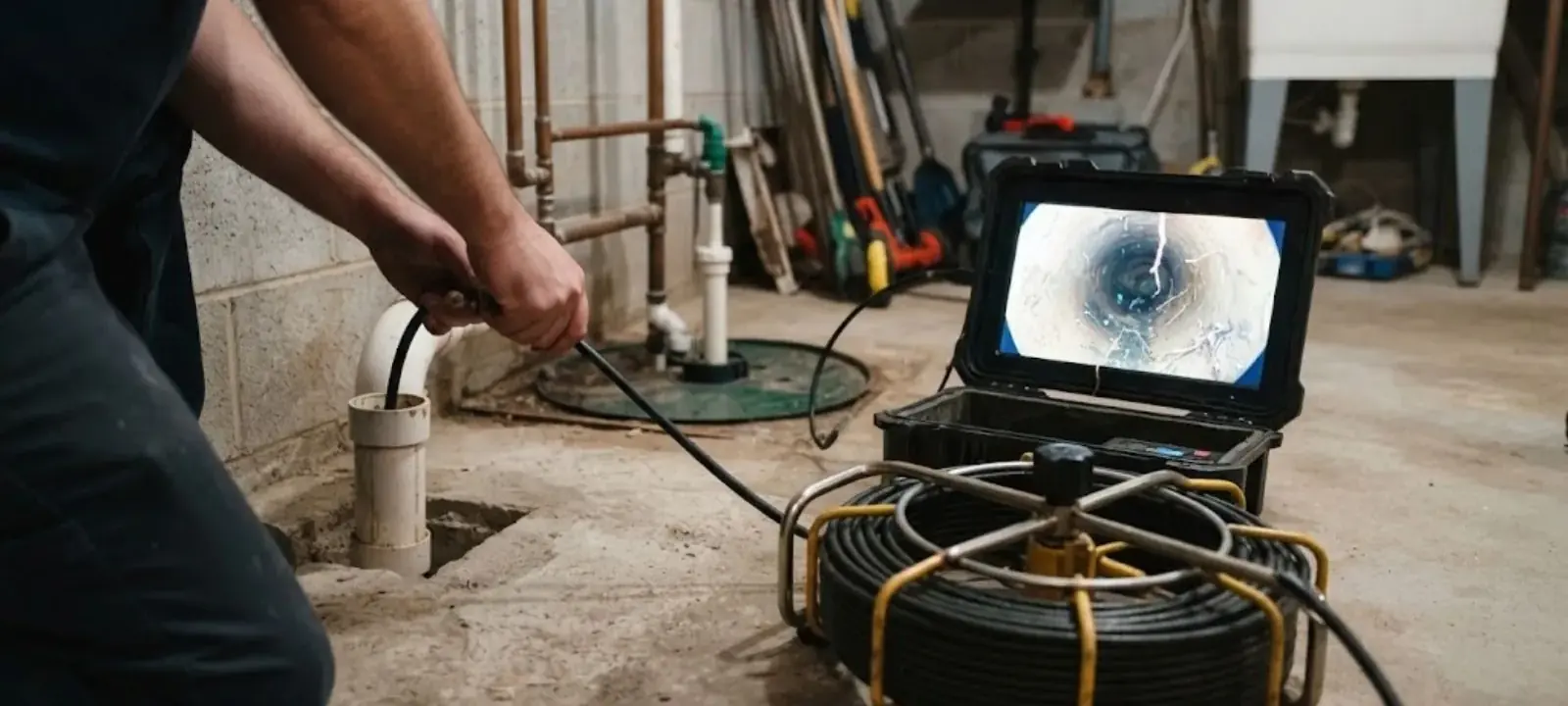
What a sewer camera inspection shows
The camera sends live video to a screen, and the cable is marked with distance. The plumber can tell you what the problem is and exactly how many feet from the cleanout it sits. That distance matters because it turns a vague repair into a defined one.
- Cracks and offsets. Joints where two sections no longer line up, or a longitudinal crack along the pipe.
- Roots. Fine hairlike roots at the joints, or a thick mass that has narrowed the pipe.
- Bellies. A low spot where water pools and solids settle.
- Buildup. Grease and scale on the wall that a cleaning will remove.
- Pipe material. Clay, cast iron, ABS, PVC or fiber, each with its own failure pattern.
Inspecting a sewer line before closing
A standard home inspection looks at fixtures and visible plumbing. It does not look inside a buried sewer line. A camera inspection does, and the cost is small compared with the cost of a collapsed line found after you move in.
Ask for the video and a written note of what it showed, including the distance to each problem. If the camera finds damage, you have information for the purchase negotiation. If it finds a clean line, you have the first piece of a maintenance record.
When a camera look is worth the visit
Some homeowners wait for a backup. Others look earlier, and a few of these situations are good reasons to do so.
Repeat slow drains
A line that keeps slowing despite cleaning needs an inside view.
A tree near the line
Roots seek water, and a mature tree within reach of the line is the usual source.
A purchase or listing
Buyers and sellers both benefit from a documented pipe condition.
Before a landscape project
Hardscape, pools and new plantings go over buried pipes. Know where yours runs first.
Why the sewer in an older Dana Point house deserves a look
Houses in Capistrano Beach, where building began in 1925, and in Lantern Village near the harbor can be a century old or close to it. Pipe laid then was built to the standards of its day, not ours. A camera is the only way to know whether the original line is still sound or has been replaced in sections over the years.
On the Headlands and in Niguel Shores, homes sit close to coastal bluffs, and ground movement can shift pipe joints over time. Where that is a concern, ask the plumber to note any offsets and their distance from the house so a future owner can compare.
What each finding usually means
| Finding | What it means | Typical next step |
|---|---|---|
| Light grease or scale | Surface buildup only | Main line cleaning or jetting |
| Fine roots at joints | Joints open slightly | Clear roots, watch the joint, or repair |
| Single crack | A localized failure | Spot repair |
| Belly with standing water | Pipe has settled | Monitor or replace the section |
| Collapse or missing section | Line no longer carries flow | Replacement of the damaged length |
What affects the price of a sewer camera inspection
A camera inspection is a priced visit with a clear scope, and most of the variation comes from access.
Insurance rarely pays for an inspection, but a documented finding can support a claim if a sudden failure causes damage later.
Common Questions
A straightforward inspection of a short run takes a short visit. A long lateral, a cleaning before the camera, or a hard-to-reach cleanout adds time. The plumber can give you a realistic window when you call.
Ask for it when you book. A copy of the footage and a note of the distance to each problem are what make the inspection useful for repairs, insurance and a sale.
Often yes. The plumber may remove a toilet or use a roof vent to enter the line, and may recommend adding a cleanout so the next visit is simpler.
Yes. Ask for the footage and a written note, and say whether you need it on a deadline. Same-day appointments are available when schedules allow.
It can show a crack or an open joint that leaks. It does not detect water seepage into soil the way a leak detection tool does. For a suspected water supply leak, see leak detection.
No. The camera goes into drain and sewer lines only. Supply line problems need pressure testing and acoustic or thermal tools.
Need an answer for your own address? Call (949) 325-3122