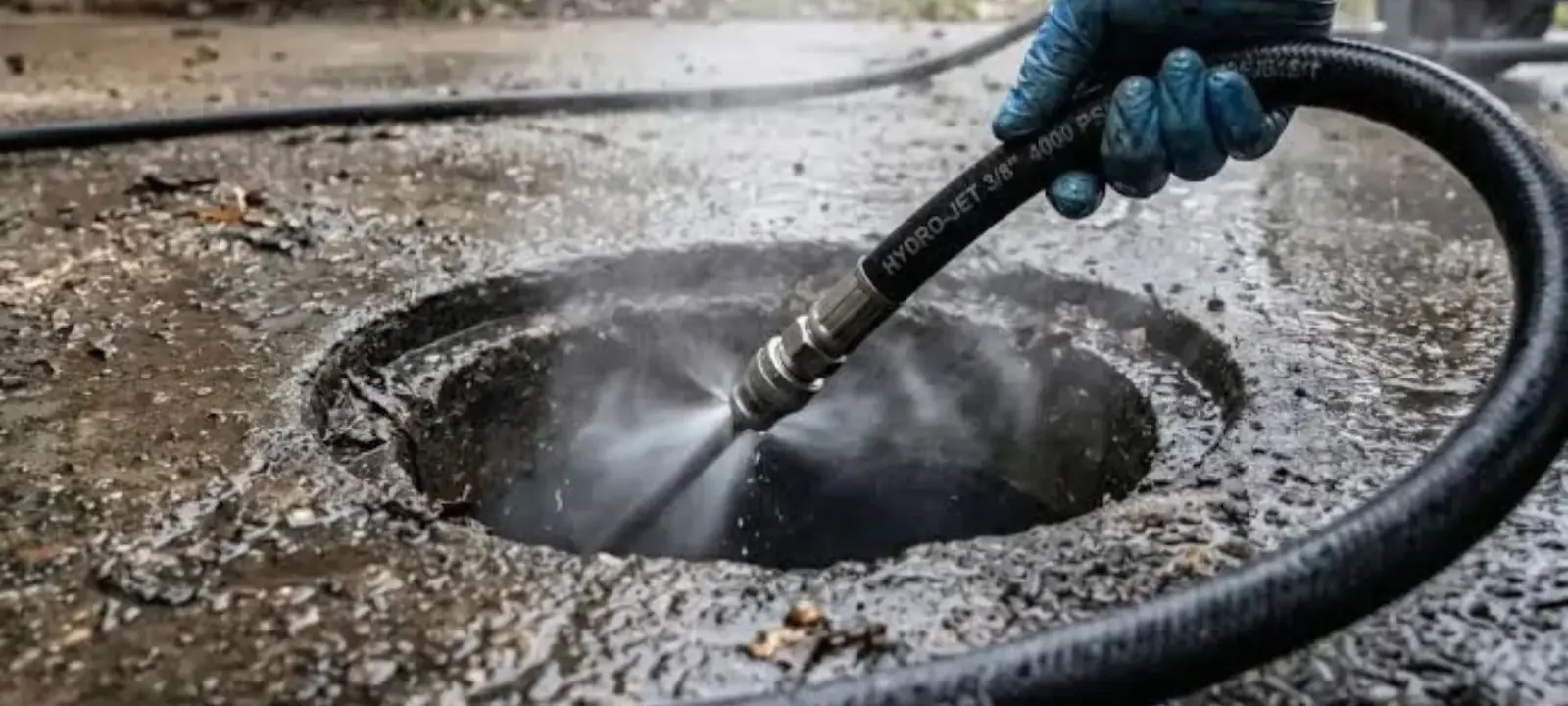
What a hydro jetter actually does
A hose with a special nozzle goes into the line through a cleanout or an opened trap. Water leaves the nozzle at high pressure in several small jets, some facing backward. The backward jets pull the hose forward through the pipe while the forward jet breaks up the blockage.
The result is a pipe wall that is washed, not just opened. A cable cuts a hole through a clog and leaves a coating behind. A jetter removes the coating, which is why a jetted line stays clear far longer than a snaked one.
Backups that point to jetting
Callers rarely say they need hydro jetting. They describe what the line is doing, and the pattern tells the plumber whether a jetter is the right tool.
It was snaked and clogged again
A clog that returns within weeks usually means a coating or a root mass is left behind.
The cable stopped at one spot
A cable that cannot get past a point may be stopped by a thick plug that a jetter can break apart.
Slow drains throughout the house
Several fixtures slowing together points to buildup along the main, not a single clog.
Kitchen grease on a long run
A kitchen line that runs far to the main collects grease, which hot water from the jetter softens and flushes.
Sewer backup: what to do first
When sewage is rising in a tub or a floor drain, the first job is to stop adding water. Do not flush, do not run the dishwasher and do not start laundry. Keep children and pets away from the affected floor, and open a window if the smell is strong.
Then call. The dispatcher asks where the water first appeared and whether you have a cleanout, because that decides where the hose goes in. A jetter is often brought out for a heavy backup, and the plumber confirms the plan before charging for it. Ask about same-day availability when you call.
When jetting helps and when it should wait
Jetting is powerful, which is the reason a camera look should come first on an older line.
Jetting is a good fit
- Grease buildup on a long kitchen or main run
- Fine roots on sound pipe
- Scale on old cast iron
- A line that clogs repeatedly
Look first or repair first
- A cracked or collapsed clay pipe
- A pipe with a visible offset or belly
- Orangeburg or other fiber pipe, which can fail under pressure
- A line that has already been jetted and still fails
Where the camera shows a break, the answer moves to sewer line repair instead. A look inside is the job of sewer camera inspection, which many plumbers pair with the jetting visit.
Restaurant lines and older houses around Dana Point
Dana Point Harbor has marina shops and restaurants, and Pacific Coast Highway has more food businesses along its length. Kitchens that cook all day send a steady grease load into their drains, so those lines build up faster than a house line does. A scheduled jetting visit, coordinated through commercial plumbing, keeps a restaurant from closing during service.
At home, the same logic applies to older streets. Homes from the 1920s onward in Lantern Village and Capistrano Beach may still carry their first drain lines, and fine roots find the joints in clay and cast iron. Jetting clears the roots, but roots return unless the joint is repaired. The plumber will tell you which you have.
What affects the price of hydro jetting
A jetting visit costs more than a cable pass because the equipment is heavier and the water has to be managed. The final number reflects the job in front of the plumber.
Sewer backup caused by a failing line is a different insurance question from water damage after a pipe bursts, and many policies treat it separately. Read the backup language in your own policy before you file.
What code and which office apply
Jetting clears a line without changing it, so it is maintenance, not construction. If the camera shows a broken section, the repair falls under the California Plumbing Code (Part 5 of Title 24, based on the Uniform Plumbing Code), and the city's Building and Safety Division at (949) 248-3564 is the office to ask about a permit.
Common Questions
Yes. The 24/7 line takes calls any hour, and for a severe backup a plumber with a jetter can be dispatched after hours. Whether the jetter is the right first tool depends on what the line is doing, and the dispatcher will tell you what to expect.
It is safe for a pipe that is structurally sound. On a cracked, collapsed or fiber pipe the pressure can make damage worse, which is why a camera look comes first on an older line.
A cable cuts through a clog. A jetter washes the whole pipe wall. Jetting costs more per visit and usually holds longer, especially on grease and root problems.
Yes, it clears roots inside the pipe. It does not fix the crack the roots came through, so a root problem that returns needs a repair or a lining decision.
It can clear a heavy grease buildup in the line. Regular visits matter more than one big cleaning. A grease trap, if the kitchen has one, is a separate maintenance job covered under commercial plumbing.
It helps a great deal. If the house has no cleanout, the plumber may enter through a toilet or a roof vent, and may suggest adding a cleanout so future jobs are faster.
Need an answer for your own address? Call (949) 325-3122