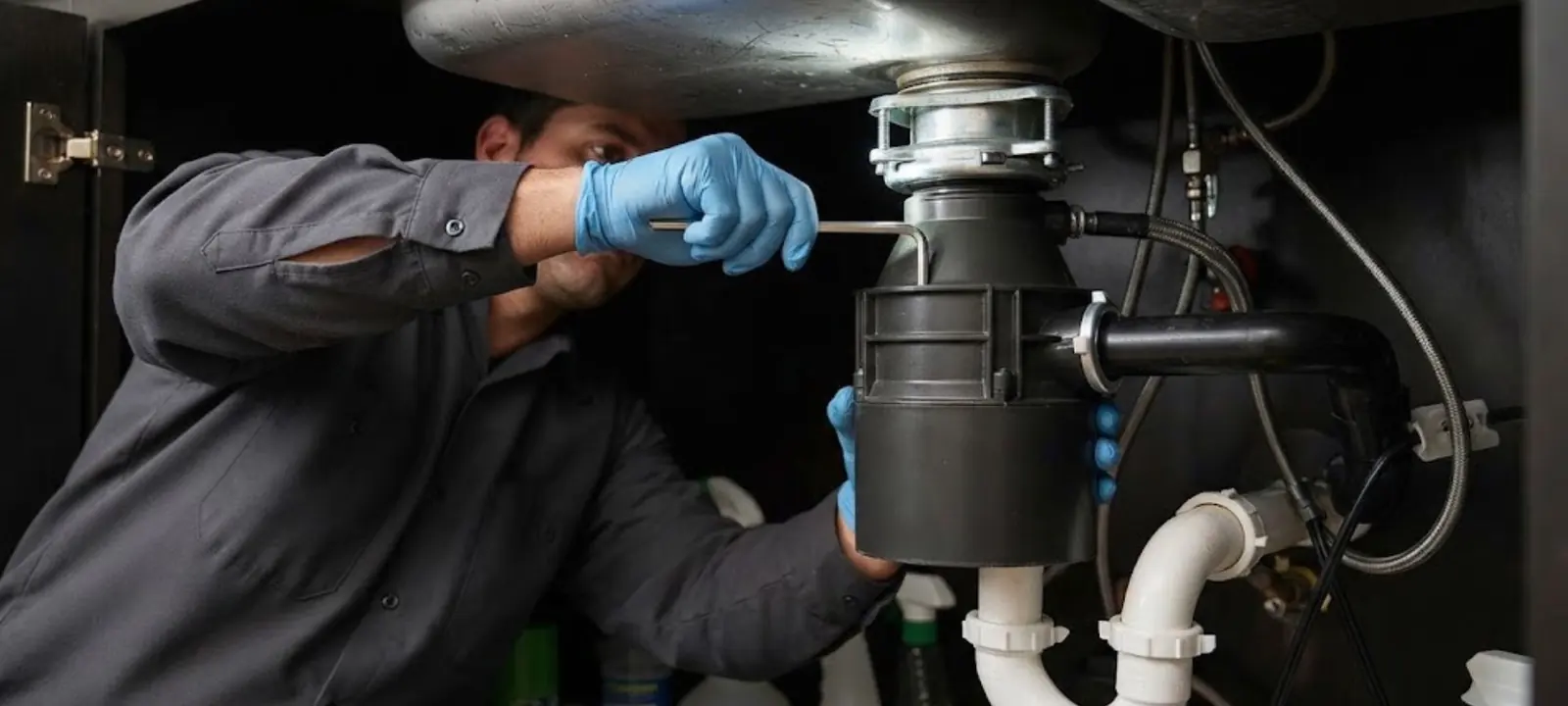
Disposal problems that need a fast call
Most disposal problems are annoying. A few cause water damage.
- Water dripping from the bottom or the side. A leak from the housing means the unit has failed. A leak at the sink flange or the drain connection may just need resealing.
- The sink is full and will not drain. A blockage past the disposal backs the sink up. See drain cleaning if the disposal runs but the sink stays full.
- A burning smell or smoke. Switch it off at the wall and do not use it again. The motor is failing.
- Water on the cabinet floor. Check the dishwasher hose, the drain trap and the disposal. The leak may not be where you think.
Why a disposal hums but does not spin
A humming disposal has power but cannot turn. That usually means a jam.
A foreign object
A bone, a utensil or a piece of fruit pit can wedge between the impellers and the shredder ring.
Tripped reset
Most disposals have a red reset button on the bottom. Pressing it may restore the unit after a jam clears.
Worn motor
A motor that hums and will not turn after clearing the jam may have failed.
Seized flywheel
Corrosion can lock the flywheel, particularly on older units.
Plumbing a double sink with a disposal
A double kitchen sink has two basins that share one drain. The disposal usually sits under one, and a tailpiece connects the other basin to the same trap. A dishwasher connects to the disposal inlet or to an air gap.
Problems often trace to one of these connections. A loose slip nut under the second basin, a cracked tailpiece or a dishwasher hose that has slipped off the disposal inlet can all produce a leak. A plumber can reconnect the lines, replace the parts and test the whole assembly.
Repair or replace a disposal
Disposals are inexpensive enough that replacement is often the better choice.
Repair when
- A jam can be cleared and the motor is fine
- A leak is at a seal or a connection
- The unit is fairly new
- The unit is a good model
Replace when
- The housing leaks
- The motor is burned out
- The unit is over ten years old
- It jams repeatedly
A new disposal needs an electrical outlet or hardwired connection, a mounting ring and a drain connection. The plumber handles all of it.
Kitchens, harbor restaurants and the line behind the disposal
Home kitchens in Dana Point share a common failure point with the town's restaurants: grease. Cooking oil and fat poured down the sink coat the pipe beyond the disposal, and the disposal itself cannot stop it. If a disposal repair is followed by another clog, the problem is probably the drain line, and hydro jetting may be the cleaner fix.
Older homes in Capistrano Beach and Lantern Village may have kitchen drains that run a long way under the house to reach the main. A longer run gives grease more place to settle. A camera look and a cleaning together settle the question.
What affects the price of disposal repair or installation
A repair is a quick visit. An installation adds the price of the unit.
Insurance rarely covers a disposal that has worn out, but it may cover water damage from a sudden leak.
What code and which office apply
A disposal's drain connection and trap are covered by the California Plumbing Code, which is based on the Uniform Plumbing Code (UPC). The electrical side, including the switch and the cord or hardwire connection, follows the California Electrical Code, so a plumber who finds a wiring fault will say so and stop.
Common Questions
Yes. The 24/7 line is open. A leaking unit is dispatched promptly. Switch it off and turn off the cold supply under the sink.
Switch it off at the wall, press the red reset button on the bottom and try again. If it still will not turn, the plumber can clear the jam or advise on replacement.
Yes. Installation covers mounting, the electrical connection, the drain and the dishwasher connection.
Possibly. A hose that has slipped off the disposal inlet is a common cause. The plumber can check and reconnect it.
Grease and oil, coffee grounds in large amounts, fibrous scraps such as celery, and bones or pits. Run cold water while grinding.
Yes. Give the unit address and ask for written findings.
Need an answer for your own address? Call (949) 325-3122