Is it a leak? Check the meter first
Before a plumber arrives, you can confirm a suspected leak in about ten minutes. Turn off every faucet, appliance and irrigation zone in the house. Then look at the water meter, usually in a box near the street. Many meters have a small dial or triangle that turns with even a slight flow. If it moves with everything off, water is leaking somewhere on your side of the meter.
Next, close the home's main shutoff valve and look at the meter again. If it stops, the leak is inside the house. If it keeps moving, the leak is on the line between the meter and the house. That single test tells the plumber which tools to bring.
Water bill went up and nobody knows why
A bill that jumps without a change in habits is one of the most common reasons people call about leaks. Toilet flappers that leak into the bowl, irrigation valves stuck open and a pinhole in a line under a slab can each add a surprising amount of water over a billing cycle.
A toilet is the first suspect because it is cheap to test. Drop food coloring in the tank, wait fifteen minutes without flushing and look for color in the bowl. If the bowl stays clear, the toilet is fine and the leak is elsewhere. Then the meter test above narrows the search to inside or outside the house.
How hidden leaks get found
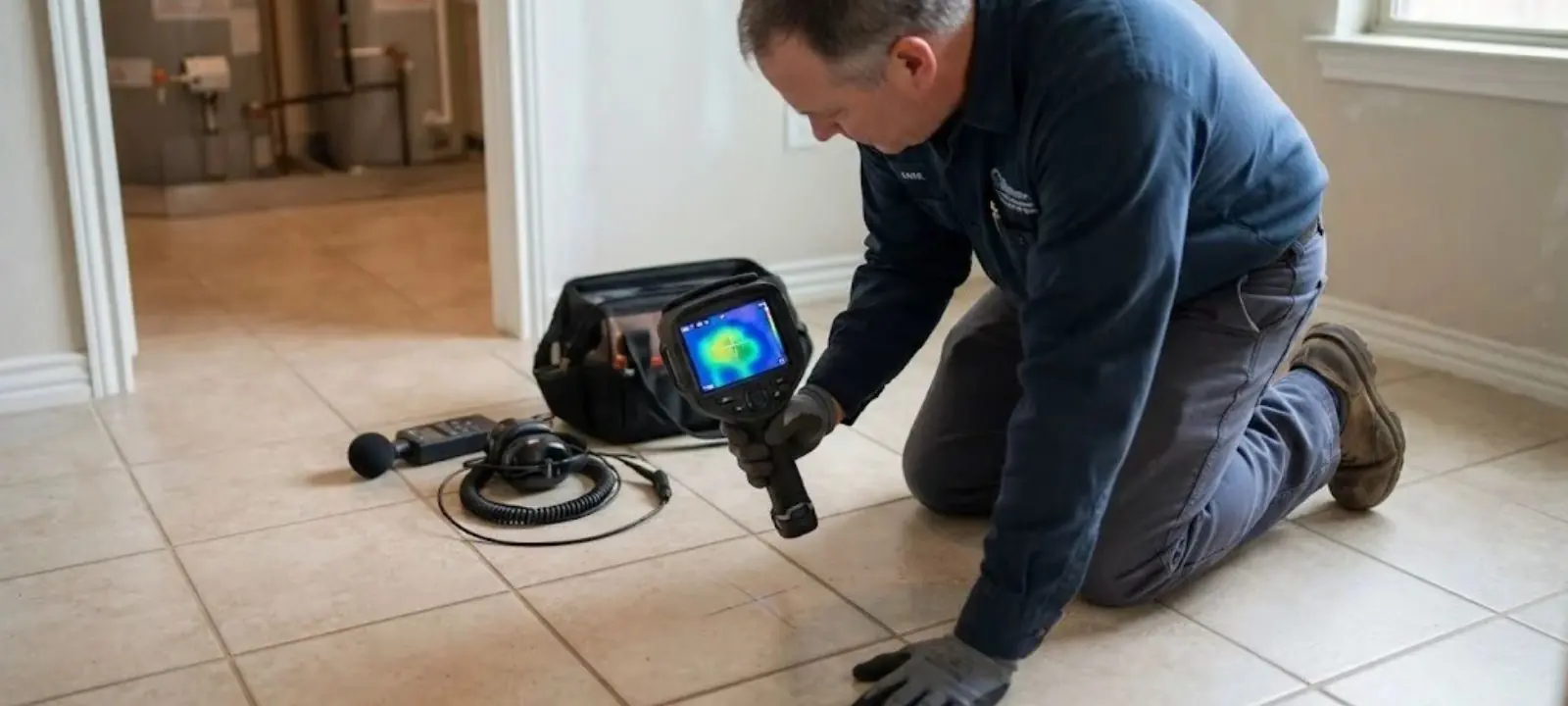
Leak detection is a measurement job, not a demolition job. The plumber uses a short list of tools, and each answers a different question.
- Acoustic listening. A sensitive microphone and ground sensor pick up the sound of water escaping a pressurized pipe. It works well on slabs and buried lines.
- Thermal imaging. A camera shows temperature differences. A hot water line leaking into a wall or slab leaves a warm patch.
- Pressure testing. The plumber isolates a section of pipe and watches whether pressure holds. A drop means a leak in that section.
- Tracer gas. A safe, non-toxic gas is introduced into the line and detected at the surface, which pinpoints small leaks.
- Moisture meters. These confirm whether a wall, ceiling or subfloor is wet and map how far the dampness spreads.
Ceiling stains, wet walls and warm floors
Water travels. A stain on a ceiling can sit several feet from the pipe that is leaking above it, so the first job is mapping, not cutting.
Ceiling stain
The source may be a bathroom above, a supply line in the attic or a roof leak that mimics a plumbing leak. Moisture mapping separates them.
Damp or bubbling wall
Paint that bubbles or drywall that softens around a shower or tub often points to a failed valve or a supply line behind it.
Warm patch on the floor
A hot water line leaking under a slab warms the concrete. Thermal imaging shows the path.
Sound of running water at night
Hearing a hiss or trickle in a quiet house is a strong sign of a pressurized leak.
Crawlspace and under-house leaks
Raised-foundation homes have a crawlspace where plumbing, drains and ductwork run under the floor. A leak there rarely shows on the surface for a long time. Signs include a musty smell, floors that feel soft or bounce, rust stains on fasteners and sagging insulation.
A plumber can inspect the crawlspace directly, test sections of line and photograph what is found. Persistent moisture under a house also invites mold and wood damage, so a slow leak is worth tracing quickly.
Buried lines, irrigation and the meter box
Yard leaks are harder to see because soil hides them. Look for a patch of lawn that stays green or soggy while the rest dries, a section of driveway that stays damp or a meter box that fills with water between readings.
A buried line between the meter and the house is a common source, covered further under water service line repair. Irrigation lines leak at fittings and valves, and a leak in a zone can run unnoticed for weeks. Pool and spa lines add another place for water to leave, and one more reason to run the meter test before assuming the pool is the cause.
Leak hunting in Dana Point's slope and coastal homes
South Coast Water District supplies Dana Point's water, and the district's own planning documents say it buys imported water through the Municipal Water District of Orange County and also draws local groundwater from the San Juan Basin. Whatever the source, the water arrives at your meter at the same pressure, and a pinhole in a pipe leaks the same way anywhere.
What differs here is the ground and the air. Homes near the Headlands and Niguel Shores sit close to coastal bluffs, so water leaking into a slope can travel before it surfaces. Salt air speeds corrosion on exterior valves and fittings. And older houses in Capistrano Beach and Lantern Village may still carry original galvanized or copper lines that have thinned over the decades. All of that is the reason acoustic and thermal tools beat guesswork on this coast.
Symptom, probable location and first test
| Symptom | Probable location | First test |
|---|---|---|
| Meter moves with all water off | Supply line, either side of the house | Close main valve and recheck the meter |
| Warm spot on a floor | Hot water line under a slab | Thermal scan of the floor |
| Ceiling stain | Bath above or attic supply line | Moisture map the ceiling |
| Musty smell in a raised-foundation home | Crawlspace pipe or drain | Direct inspection under the house |
| Soggy patch in the yard | Buried line or irrigation | Acoustic ground listening |
What affects the price of leak detection
Detection is usually priced as a visit, and any repair is quoted separately once the leak is located. A clear price comes before the work starts.
Many homeowner policies cover sudden leak damage but not the repair of the pipe itself or slow leaks that went on for months. Detection photos and a written location note help if you file a claim.
What code and which office apply
Finding a leak is a diagnostic job and carries no permit. Repairing what is found follows the California Plumbing Code, which is based on the Uniform Plumbing Code (UPC). According to the City of Dana Point, permits are generally required for almost all construction, so ask the plumber whether the repair needs one before walls or floors are opened.
What to do while you wait for a leak check
- Turn everything off. No fixture or appliance should run.
- Read the meter. Note the dial, wait 15 minutes and read again.
- Close the main if water is visible. Then call the 24/7 line.
- Stay clear of wet power. Do not touch wet outlets or switches.
Common Questions
Yes. The 24/7 line takes calls any hour. If water is actively running, the first step is the main shutoff, and a plumber can be dispatched after hours to stop the flow and start locating the source. A slow leak with no active flooding is usually fine for a same-day appointment.
Leak detection uses acoustic listening devices, thermal imaging, pressure testing and moisture meters. Ask the dispatcher which tools the visit includes, and ask to see the readings that mark the location.
Check the toilets for slow leaks, confirm no irrigation zone is stuck open and run the meter test. If the meter moves with everything off, call and say so. That detail saves time on site.
Usually, yes. Thermal imaging and a moisture meter show where a wall is wet, and acoustic tools can hear a pressurized pipe leaking behind it. The plumber then opens only the spot that matters.
Yes, for shops, restaurants and offices. Commercial properties often have more fixtures and longer runs, so the visit can take longer. See commercial plumbing for how after-hours calls work.
Yes. Tell the dispatcher you are the owner or manager and give the unit address. Ask for written findings and photos for your records and your insurer.
Need an answer for your own address? Call (949) 325-3122