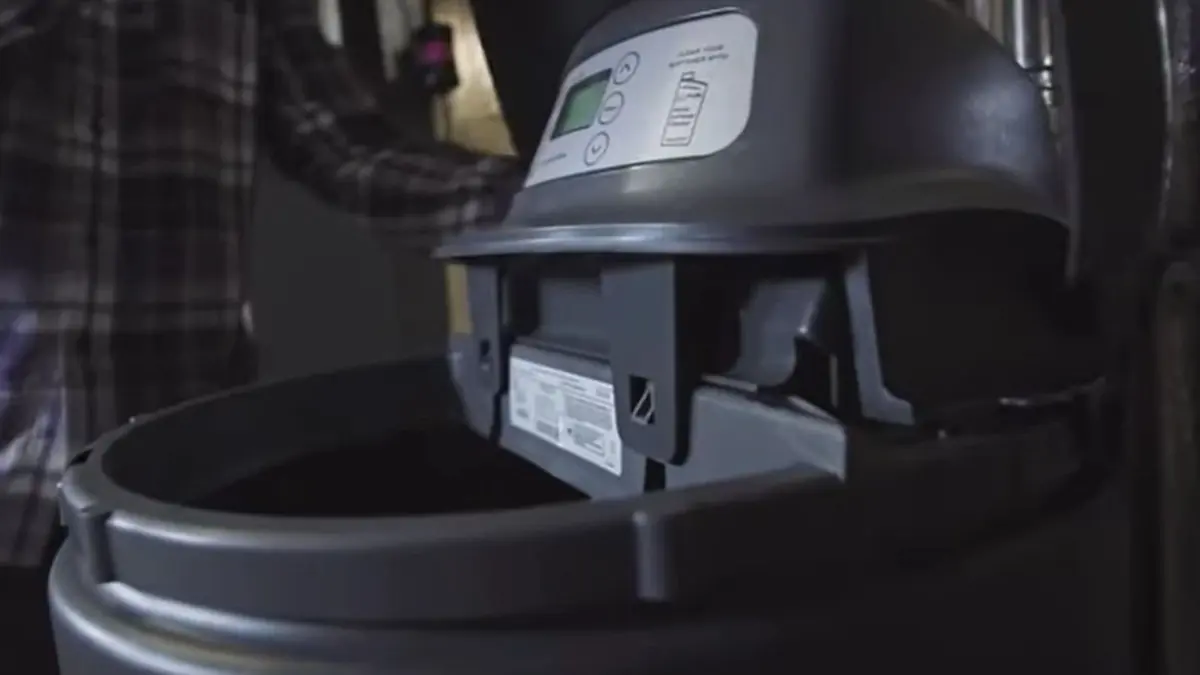
What the control valve does
A softener has two tanks. The resin tank holds the beads that grab hardness minerals. The brine tank holds salt. The control valve sits on top of the resin tank and moves water through a cycle: service, backwash, brine draw, rinse and refill.
Inside the valve are seals, a piston or disc, small passages and a drive motor or a timer. Hard water, grit and age wear these parts, and most valve repairs replace seals, a piston or the motor.
Signs the valve is failing
A failing valve rarely announces itself with a bang. Look for these.
- Hard water returns. White scale, spotty glasses or soap that does not lather.
- Water leaks from the valve. Seals or the body have failed.
- The unit regenerates constantly. The valve is stuck in a cycle, or the timer is wrong.
- Salt level never changes. The valve is not drawing brine.
- Noise or a constant drain flow. A piston or seal is not seating.
Things to try before you call
A few checks rule out simple problems. Confirm the unit has power and the display is on. Check that the bypass valve is in the service position, not bypass. Look in the brine tank. If a hard crust of salt has formed above the water, break it up, since a salt bridge stops the unit from making brine.
Try a manual regeneration according to the manual. If the unit runs a cycle and soft water returns, the issue may be the schedule or the salt. If it does not, the valve needs a closer look.
Repair the valve or replace the softener
Many softeners last a long time. Valves are often repairable.
Repair when
- The unit is under about ten to twelve years old
- Only seals or the motor have failed
- The tank and resin are in good condition
- Parts are available for the brand
Replace when
- The tank is cracked or corroded
- The resin has worn out
- Parts are no longer available
- Repairs are frequent
What the district publishes and what to ask it
South Coast Water District supplies Dana Point and says its annual water quality report is available at scwd.org/report. Your softener's settings, and whether you need one at all, should start from that report or a test of your own tap. We do not publish a hardness figure here because the district's report is the right source.
The district also provides wastewater service in Dana Point, according to the Orange County Local Agency Formation Commission's regional service review. Softeners discharge brine to a drain when they regenerate. If you are adding or replacing a unit, ask the district whether any rules apply to that discharge at your address.
Keeping a softener valve healthy
A few habits extend the life of the valve.
- Use clean salt. Dirty salt sends grit into the valve.
- Check the brine tank every few months. Break up salt bridges and keep the level above the water.
- Clean the injector or screen when recommended. A small clog can stop brine draw.
- Keep records. Note the brand, model and settings so a plumber can work faster.
Which valve parts wear out first
Seals and spacers wear first, because they move every cycle and sit in mineral-rich water. Next come the piston, the injector and its screen, then the drive motor or the electronic board. The brine line and its fittings can also fail and let air into the system.
Replacement kits exist for most popular brands, and a plumber can often rebuild a valve on site. Take a photo of the label on the valve head and the tank so the right kit is ordered.
Settings that cause trouble when they are wrong
A wrong hardness setting makes the softener regenerate too often or too rarely. A wrong time of day can run a cycle while the household is using water. A wrong salt dose wastes salt and water.
If the control display shows an error code, write it down before unplugging anything. The code, with the brand name, tells a plumber most of what is needed. Power outages can also reset the clock, so check the time after a storm.
How to tell the valve from the water
Not every hard-water symptom points at the valve. A softener that runs out of salt, a bypass left open or a plugged resin bed can all bring scale back. Check salt, bypass and power first, then note whether the unit regenerates at all.
If it regenerates on schedule but the water stays hard, the resin or the brine draw is the likelier cause. If it never regenerates, or regenerates nonstop, the valve or its controls are the likelier cause. That split saves money, since it points the plumber at the right part before the visit.
What to have ready when you call
Have the brand, the model, the age if known and the error code if one shows. Tell us what the unit does and what it fails to do, and when it last worked well. A photo of the valve head helps a plumber arrive with the right kit.
Common Questions
Usually. Seals, pistons and motors are replaceable on most brands. The plumber checks what is available.
A leak from the valve usually means a failed seal or a cracked fitting. Shut the bypass and call.
It depends on water hardness and household use. Check the manual, and ask the plumber to confirm your settings.
South Coast Water District says its annual report is available at scwd.org/report.
Yes. See our San Clemente page. Our service areas page explains how it works.
Need an answer for your own address? Call (949) 325-3122