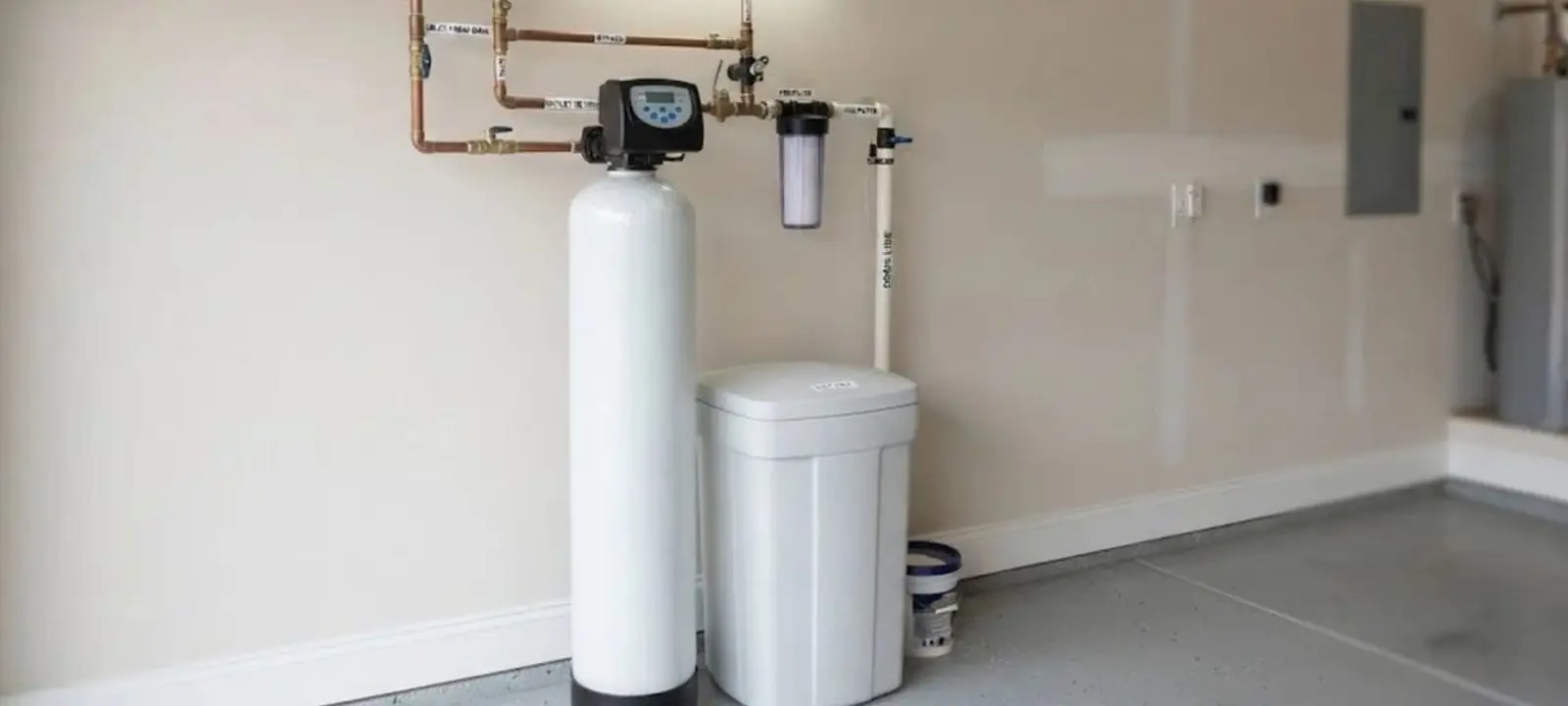
Test your tap before buying anything
A softener is sized and set from the hardness of the water, and a filter is chosen from what you want to remove. Guessing leads to the wrong equipment, so start with a test. A home test strip gives a rough number. A lab test gives a precise one.
You can also ask the water utility for its annual water quality report. South Coast Water District supplies Dana Point and says its report is available at scwd.org/report. We do not publish a hardness figure on this page, because the district's own report is the right source and the number can change.
Softener, filter or both
People often use the words as if they mean the same thing, and they do not.
- Water softener. Uses salt or potassium to swap hardness minerals for sodium or potassium. It protects pipes and appliances and reduces scale.
- Carbon filter. Removes chlorine taste and odor, and some other compounds, but does not soften.
- Sediment filter. Catches sand and particles before they reach fixtures and appliances.
- Reverse osmosis. A small under-sink system that polishes drinking water by pushing it through a fine membrane.
- Whole-house filtration. A filter at the main that treats all the water in the house.
Softener not working: common problems
Softeners are simple machines, and most failures are small. A call about a system that is not working usually traces to one of these.
Salt bridge
A hard crust in the brine tank stops salt from dissolving, so the unit regenerates without actually softening.
Control valve failure
The valve directs water during regeneration. A worn valve can leak, stick or lose its settings.
Resin that has worn out
After many years the resin beads stop working and need replacing.
Power or settings issue
A tripped outlet or a reset timer can stop regeneration.
What to ask the district and what to watch at home
South Coast Water District says it provides water and wastewater service to about 35,000 residents. Its supply comes from imported water bought through the Municipal Water District of Orange County and from local groundwater, according to the district's regional planning documents. The mix can shift, so the report for the most recent year is the one to read.
At home, watch for white scale on shower doors and faucet tips, a crust inside kettles and spots on dishes. These suggest hard water. Also look at the water heater, because scale inside the tank shortens its life. If you see signs, a test and a plan are worth doing. See tankless water heater service for how scale affects on-demand units.
Salt softener or salt-free conditioner
Two types of treatment are common. They work differently.
Salt-based softener
- Removes hardness minerals
- Protects appliances and pipes
- Needs salt refills and a drain connection
- Adds a small amount of sodium or potassium
Salt-free conditioner
- Alters scale so it does not stick
- No salt and less maintenance
- Does not remove hardness
- Effectiveness varies by model
Some cities limit or regulate salt-based regeneration discharge. Ask the city or the plumber whether that applies where you live.
What affects the price of a softener or filter
Treatment equipment ranges from simple to elaborate, and the installation matters as much as the unit.
Insurance does not typically cover treatment equipment. Keep manuals and receipts for warranties.
Common Questions
White scale on fixtures, spots on glasses and crust inside kettles are common signs. A test strip or a lab test gives a number, and the water utility's annual report is another source.
Yes. Control valve repair is among the more common calls. Tell the dispatcher the brand and how old the unit is.
Not always. If your water is hard, scale builds up in the heat exchanger. A softener or a scale inhibitor can protect it. Test first.
They do different things. A salt-free conditioner changes how scale forms but does not remove hardness. A softener removes it. The right choice depends on your water and your goals.
Yes. It is a common install and it uses a small dedicated faucet. Ask the plumber about the drain connection and the filter schedule.
Yes. If the unit is leaking, close its bypass or the main valve and call the 24/7 line.
Need an answer for your own address? Call (949) 325-3122