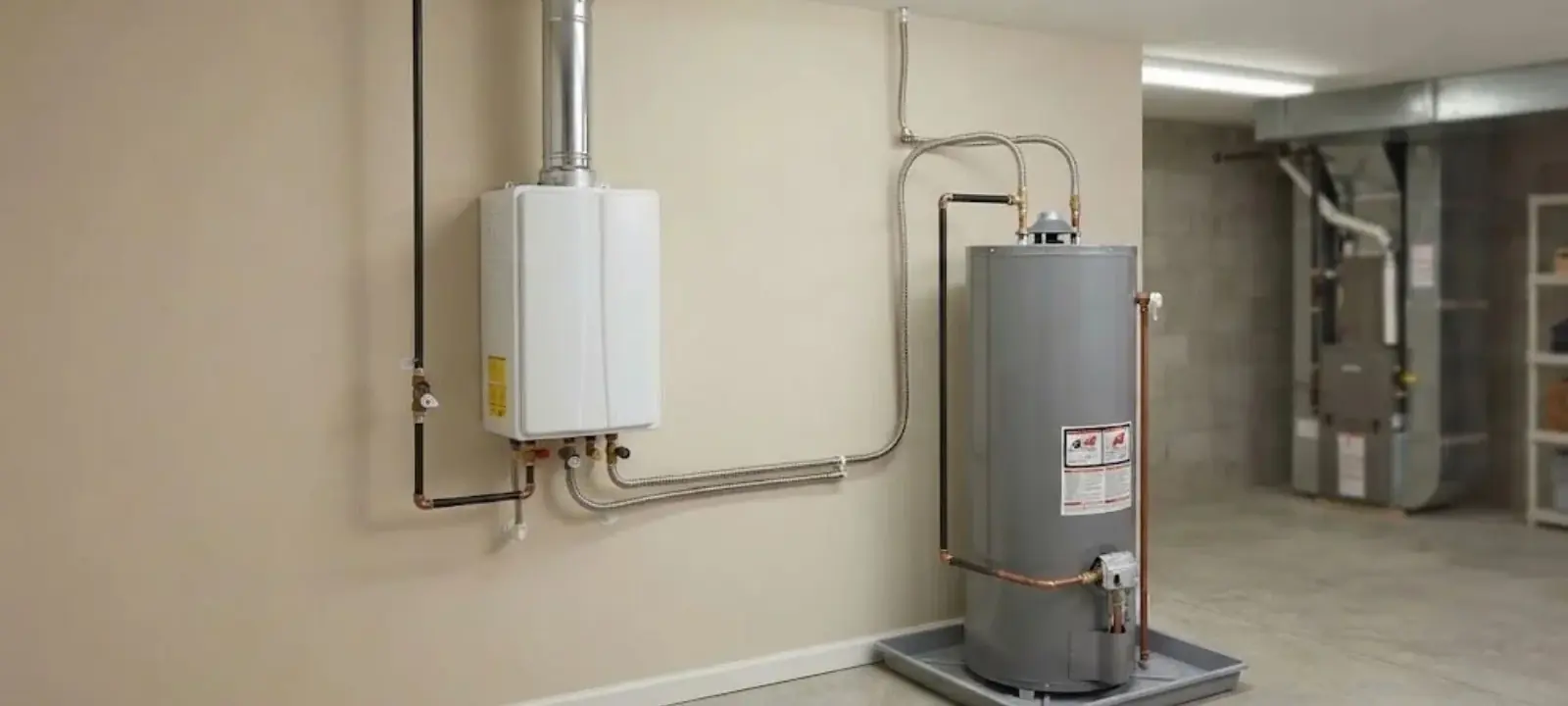
Why a tankless unit needs flushing
Minerals in water settle on the heat exchanger inside a tankless heater. Over time they restrict flow and force the unit to work harder. The first signs are slower heating, fluctuating temperature and error codes. Left alone, the buildup shortens the life of the unit.
A flush circulates a descaling solution through the heat exchanger to dissolve the minerals, then rinses it out. Many manufacturers recommend it about once a year, and it depends on how much mineral content is in the water. Ask the plumber what your manufacturer specifies.
When a tankless heater needs service
Many people call after an error code appears. These are the other signs worth acting on earlier.
- Water that never gets as hot as it used to. A scaled heat exchanger loses efficiency.
- Temperature that swings. A fluctuating flame or a clogged inlet filter can cause hot and cold bursts.
- An error code on the display. Codes point to a specific fault. Photograph the code before calling.
- Noise from the unit. Rumbling or clicking can mean scale or a failing fan.
- Reduced flow. A clogged inlet screen or a scaled exchanger can cut flow.
Installing tankless for the first time
Switching from a tank to tankless is more than a swap. The plumber looks at several points before quoting.
What usually changes
- Gas line size, since tankless units draw a lot at once
- Venting, which often uses special pipe
- A condensate drain for high-efficiency models
- An electrical outlet for controls and fan
What usually stays
- The hot water pipes in the walls
- The cold water supply
- The general location, if there is space
- Your fixtures and showers
If a tank has just failed and you want to change to tankless, see water heater replacement for the decision points. For a standard tank, water heater installation covers the basics.
Outdoor tankless installation and freezing
Many tankless units are rated for outdoor mounting, which frees up interior space. An outdoor unit has to resist rain and wind, and the lines connecting it must be insulated so they do not freeze in cold snaps. Most tankless units also have built-in freeze protection, but it relies on electricity, so a power outage in a hard freeze can still cause damage.
The Orange County coast rarely has hard freezes, so the bigger outdoor concerns here are salt air and sun on the vent and fittings. Ask the plumber to protect exposed connections and to point out the freeze protection features of the model you choose.
Water, minerals and tankless units in Dana Point
South Coast Water District, which supplies Dana Point, publishes its water quality report on its own site at scwd.org/report. We do not quote a hardness figure here because the district's report is the right source, and it is worth reading before you decide how often to flush. If the water leaves white crust on fixtures, a tankless unit will build scale faster.
A simple home test strip or a quick call to a water treatment company can tell you more about your tap than a general guess. If your water is hard enough to scale the unit, pairing it with a softener or a scale inhibitor can protect it. See water softener and filtration for what that involves.
What affects the price of tankless water heater work
Flushing is a small service. Installation is a larger project, and repairs fall between.
Some manufacturer warranties require documented annual flushing. Keep the invoice from each service.
Common Questions
Many manufacturers recommend about once a year, but it depends on the mineral content of your water. Check your manual and keep the service invoice, since some warranties ask for it.
It can, if exposed lines are not insulated and the freeze protection loses power. Freezing is uncommon on the Orange County coast, but the plumber can protect outdoor connections and explain the unit's built-in protections.
Tankless service is covered, including descaling and error code diagnosis. Tell the dispatcher the make and model so the right plumber is sent.
Photograph the code and the model label, turn off the unit if it is leaking and call. The code points to a likely cause and shortens the visit.
Often it saves space and energy, but the upfront cost is higher. The plumber can compare your usage and give you a plain answer.
Yes. The 24/7 line is open at all hours. If the unit is leaking, shut off the water and power to it and call.
Need an answer for your own address? Call (949) 325-3122