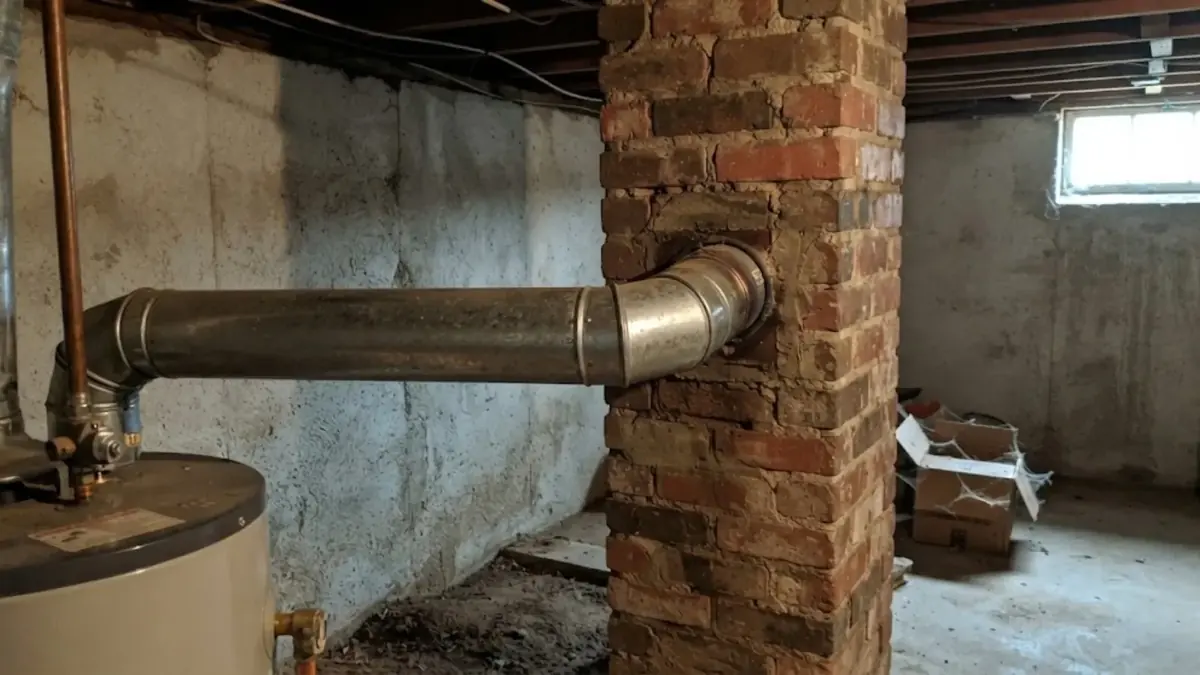
What a vent pipe does
A gas water heater draws air in, burns fuel and sends hot exhaust up and out. The exhaust is lighter than air, so in a standard atmospheric vent it rises through a draft hood at the top of the heater and through a pipe to the outside. Hot exhaust rises on its own, which is why the pipe must climb without sags.
Other heaters use a powered fan or a sealed system that pushes exhaust out through plastic pipe. These can vent sideways through a wall. The right type depends on the heater and the building, and the manufacturer's manual says which.
Four marks of a sound vent
A plumber checks these before and after installation.
Upward slope
The pipe rises from the heater to the termination. A flat or sagging run can hold exhaust back.
Tight, sealed joints
Sections are fastened with screws where required. Loose joints leak exhaust.
Clearance from combustibles
The pipe keeps the specified distance from wood and insulation.
A proper termination
The vent ends above the roof or at a rated cap, away from windows and air intakes.
Signs a vent needs attention
A bad vent can be hard to notice. A few signs are worth acting on at once. Soot or scorch marks around the draft hood suggest exhaust is spilling into the room. A rusted or crumbling pipe may leak. A pilot that blows out repeatedly can indicate a draft problem. Water stains on the vent or the ceiling around it point to condensation.
If anyone in the house has headaches, nausea or dizziness that clears when they leave, treat it as a possible carbon monoxide problem. Leave the building and call the gas utility or 911. Do not go back in to check the heater.
Common vent types and what they involve
| Type | How exhaust leaves | Typical use |
|---|---|---|
| Atmospheric (natural draft) | Rises through a metal pipe to the roof | Older tank heaters |
| Power vent | A fan pushes exhaust through a plastic pipe | Tank heaters with long or horizontal runs |
| Direct vent | Sealed intake and exhaust pipes | High-efficiency tank heaters |
| Outdoor tankless | Built-in vent, no interior pipe | Exterior wall installs |
Gas safety, inspections and who to call
SoCalGas tells customers who smell natural gas to evacuate immediately, then call 1-800-427-2200 from a safe location. Call 911 if the leak may endanger life or you cannot reach the utility. That advice applies to a vent problem that shows up as a gas smell, too.
Work on a gas vent usually needs a permit and an inspection. The City of Dana Point's Building and Safety Division performs plumbing and mechanical inspections, and inspections are scheduled through an automated line at (949) 248-3590. Its main number is (949) 248-3564. Contractors working in the city must hold a valid California contractor's license in good standing.
Why vents in coastal homes need extra attention
Salt air corrodes metal vents faster than inland air does. A single-wall steel vent in a garage near the coast can rust through from the outside. Older homes may also have vents that were fine for the original heater but are the wrong size for a newer one.
Ask the plumber to inspect the full vent run, not just the part near the heater. Flexible sections, rusty joints and a cap that has rotted can hide anywhere along the path, and a cheap fix now beats a failed inspection later.
Questions to ask your plumber about the vent
A few questions make the quote clearer.
- Is the old vent being reused or replaced? Ask for the reason either way.
- What type of vent does the new heater need? The manual specifies it.
- Where does the vent terminate? It should be above the roof line or at a rated cap, clear of windows.
- Is a permit needed? Ask who handles it and when the inspection is.
Why vent size and length matter
A vent has to be the diameter the heater's manual calls for, and it has a maximum length and a maximum number of elbows. Every elbow slows the exhaust. A vent that is too narrow, too long or full of bends can let exhaust back up into the room.
When a heater is replaced with a different model, the old vent may no longer match. A plumber measures the run, counts the elbows and compares them with the manual before reusing anything.
Carbon monoxide detectors near the heater
A carbon monoxide detector near the bedrooms and another near the heater gives an early warning that no one can smell. Test them on a schedule, replace batteries and replace the unit when its label says to.
A detector that sounds is an emergency. Get everyone outside, then call 911 or the gas utility. Do not reset the alarm and go back in. A plumber can inspect the vent once the building has been cleared.
Common Questions
Sometimes, if it is sound, correctly sized and sloped. A vent that is rusted, flat or undersized needs replacing.
Soot, scorch marks, a rusty pipe or a pilot that keeps going out are signs. Carbon monoxide has no smell, so a working detector near the heater is worth having.
Leave the building and call SoCalGas at 1-800-427-2200 or 911. Do not use phones or switches inside.
Ask the Building and Safety Division at (949) 248-3564. Inspections are scheduled at (949) 248-3590.
The 24/7 line. See water heater repair for what to do first. Our San Clemente page covers the city to the south.
Need an answer for your own address? Call (949) 325-3122