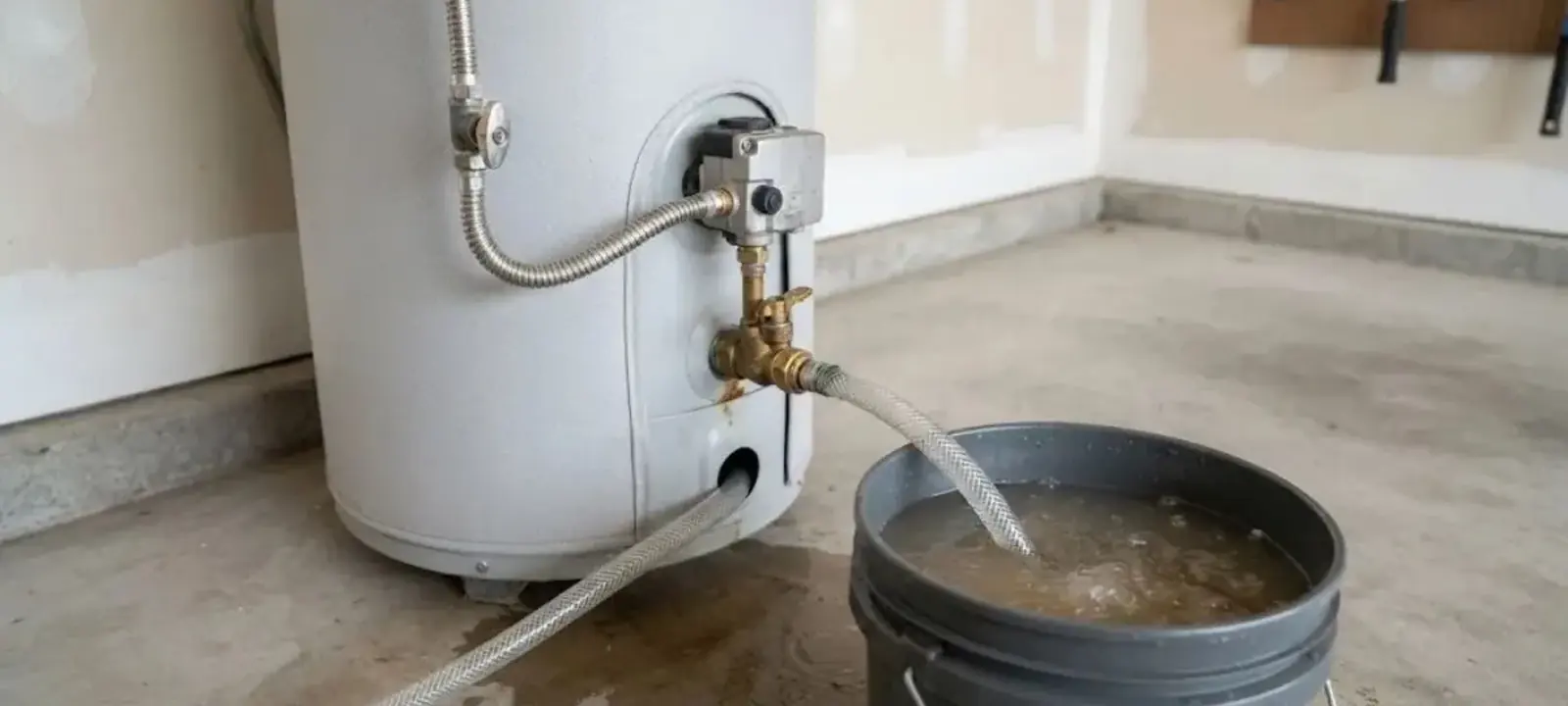
Water around the base of the heater
A wet floor under a water heater has a handful of possible sources, and only some of them mean the tank is finished. The plumber starts by finding where the water actually comes from.
- Supply or outlet connection. A dripping fitting on top of the tank is a cheap fix and does not mean the tank has failed.
- Temperature and pressure relief valve. A valve that weeps or discharges may be reacting to excess pressure or temperature, and it needs attention rather than a plug.
- Drain valve. The spigot at the bottom can drip after a flush and often just needs tightening or replacing.
- The tank itself. Water seeping from the tank body or the base means the steel has rusted through. That tank cannot be repaired.
When the tank is the source, the conversation moves to water heater replacement. A plumber who tells you the truth about which category you are in saves you from paying to fix a heater that is done.
Why a heater stops heating
No hot water at all is urgent for a household, and it has a short list of likely causes.
Gas heater, pilot out
A pilot that will not stay lit often points to a failing thermocouple or a draft problem.
Electric heater, tripped breaker or failed element
A tripped reset button or a dead element is the usual cause, and both are inexpensive to replace.
Thermostat failure
A thermostat that misreads the temperature leaves the water lukewarm or scalding.
Sediment buildup
A thick layer of mineral sediment insulates the burner or element from the water and wastes energy.
How to decide whether a heater is worth repairing
Age is the main factor. A heater under about eight years old with a single failed part is usually worth repairing. A heater past ten or twelve years old, especially one that is rusting or leaking, is often at the end of its life.
The plumber should tell you the manufacture date, which is printed on the label, and give you a plain comparison. A repair that costs more than a third of a replacement on an old unit tends to be money spent on borrowed time.
Gas, electric and heat pump (hybrid) water heaters
Repairs differ by type. A gas heater has a burner, a thermocouple, a gas control valve and a vent. An electric heater has two heating elements, thermostats and a high-limit switch. A hybrid or heat pump heater adds a compressor and a fan to the electric tank, and its repairs follow those parts.
Hybrid units save energy but are more complex, and not every plumber services them. Tell the dispatcher the make and the model when you call, so the right person is sent. If you are comparing types for a replacement, see water heater installation.
Water heaters in Dana Point garages and closets
Many Dana Point water heaters sit in garages or hallway closets. A slow leak from a heater in a garage can run along the slab edge toward the house wall before anyone sees it, and the damage shows up inside the wall first. If you find a damp patch at the foot of a wall near the garage, trace it back before assuming it is a wall leak.
California law requires water heaters to be braced, anchored or strapped against earthquake motion, according to Health and Safety Code section 19211. That includes replacement units. If your heater has no straps, ask the plumber to add them while the work is under way.
Salt air near the coast corrodes copper fittings and the tank's top connections faster than inland air does. A green crust on the nipples at the top of the heater is a sign to have the connections checked.
Symptom, likely cause and usual outcome
| Symptom | Likely cause | Usual outcome |
|---|---|---|
| Water at the base | Tank rusted through, or a loose fitting | Replace the tank, or tighten the fitting |
| No hot water, gas heater | Pilot or thermocouple | Replace the part and relight |
| No hot water, electric heater | Tripped limit or failed element | Reset or replace the element |
| Rumbling noises | Sediment on the tank bottom | Flush the tank, or replace if very old |
| Lukewarm water | Thermostat or partial element failure | Test and replace the failed part |
What affects the price of water heater repair
A repair price comes down to the part and the labor, and the plumber should explain the part before replacing it.
Insurance often covers water damage from a sudden tank failure, but not the heater itself. Photograph the area before any cleanup.
What to do before the plumber arrives
- Shut off the cold supply. Use the valve above the heater.
- Turn off gas or power. Use the switch or the breaker.
- Do not relight a pilot if you smell gas. Leave and call SoCalGas at 1-800-427-2200.
- Keep people clear of hot water. A leaking tank can be scalding.
Common Questions
Yes. The 24/7 line is open at all hours, and a leaking tank is among the first calls dispatched. Turn off the cold water supply to the heater and the power or gas while you wait.
If water is coming from the tank body, no. The steel has rusted through. If the water is coming from a fitting or the drain valve, it may be a small repair. The plumber will check before recommending anything.
The label on the side of the tank has a serial number that encodes the manufacture date. The plumber can read it, or you can look it up by brand.
Tankless and hybrid repairs are covered. See tankless water heater service for flushing and descaling. Tell the dispatcher the make and model when you call.
California Health and Safety Code section 19211 requires water heaters to be braced, anchored or strapped to resist falling or horizontal displacement during an earthquake. Ask the plumber to check yours.
Yes. Tell the dispatcher you are the owner or manager, give the unit address and ask for written findings and photos.
Need an answer for your own address? Call (949) 325-3122