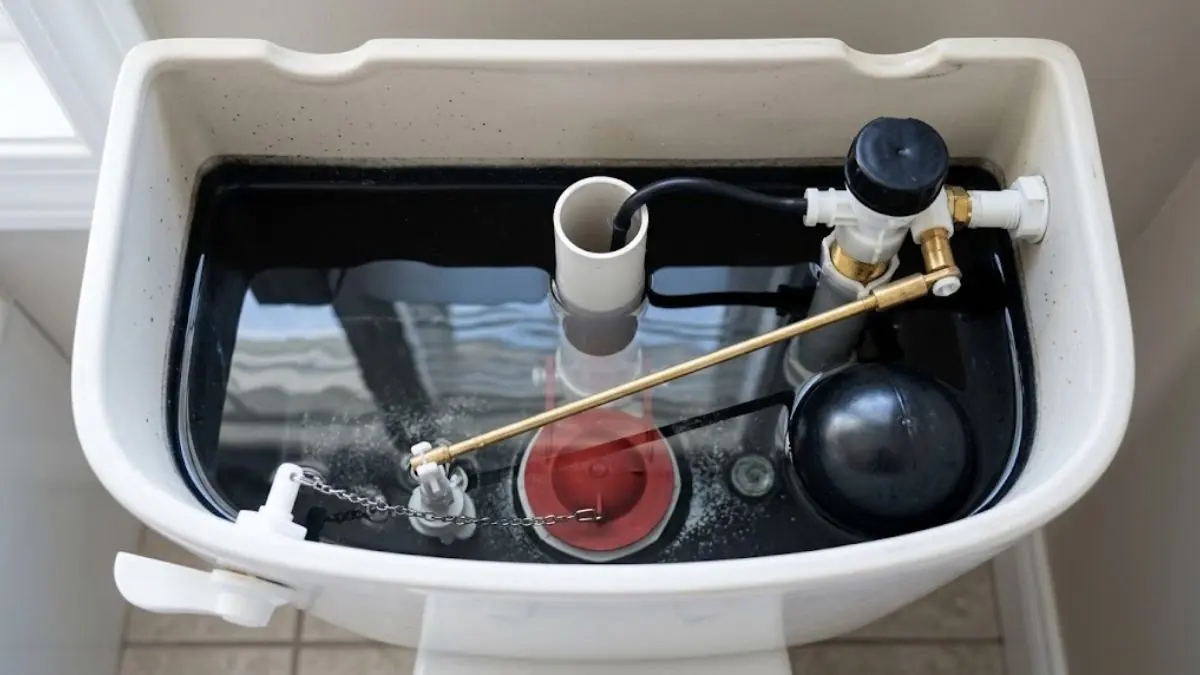
When the lever is the problem
A tank lever is the handle on the tank and the arm inside that lifts the flapper. Symptoms of a failing lever include:
- A handle that sags or feels loose. The nut inside has loosened, or the plastic has cracked.
- A flush that needs a second push. The arm is bent, or the chain is too long.
- A handle that sticks down. The arm is rubbing on the tank wall.
- A toilet that runs after flushing. The chain may be jammed under the flapper.
Replacing the lever in ten minutes
You need an adjustable wrench, a new lever of the right style and a towel.
- Shut off the water. Close the valve behind the toilet and flush to empty the tank.
- Unhook the chain. Detach the chain from the arm inside the tank.
- Loosen the nut. Unscrew the mounting nut inside the tank. Many handle nuts are reverse-threaded, so check which way it turns before forcing it.
- Remove the old handle. Pull it out from the front of the tank.
- Install the new lever. Push the new one through the hole, thread the nut on and snug it by hand, then a small turn with the wrench.
- Reattach the chain. Leave about half an inch of slack, which is enough for the flapper to seat fully.
- Turn the water on and test. Flush several times and look for catching or sticking.
Getting the chain right
Chain slack decides whether the flapper closes. Too much slack leaves the lever working a long way before it lifts the flapper. Too little holds the flapper slightly open, and the toilet runs. Aim for about half an inch of slack when the flapper is closed.
If the chain is long, trim it with pliers or clip it higher on the arm. A jammed chain under the flapper is a common cause of a running toilet. If the toilet still runs after you adjust it, the flapper itself may be worn, and replacing it is just as easy.
Front-mount, side-mount and top-mount levers
Levers come in different styles. Check yours before buying.
Front-mount
- Handle on the front of the tank
- The most common style
- Fits most standard toilets
- Easy to replace
Side-mount or top-mount
- Handle on the side or the lid
- Common on one-piece and some older models
- Needs an exact match
- Photograph yours before shopping
If the lever is fine and the toilet still runs, the next suspect is the fill valve or the flapper. Toilet repair covers what a plumber checks.
What a running toilet costs a water district that imports its water
A running toilet quietly uses a lot of water. In Dana Point that water has a larger story. South Coast Water District buys imported water from Metropolitan through the Municipal Water District of Orange County, and it added local groundwater from the San Juan Basin in 2008.
None of that changes the fix at your toilet, but it does explain why fixing a running toilet is worth the ten minutes. Every gallon that leaks into the bowl is a gallon that was pumped, treated and delivered, and you pay for it on your bill.
Beyond the lever: flapper, fill valve and the water test
Drop a few drops of food coloring into the tank and wait fifteen minutes without flushing. If color shows in the bowl, the flapper is leaking. A new flapper is a short repair. If the tank keeps filling after the toilet stops, the fill valve may be failing.
Older homes around Lantern Village and Capistrano Beach often have older toilets with discontinued parts. If you cannot find the right flapper or fill valve, replacing the toilet may cost less than hunting for parts, and the plumber can tell you which makes more sense.
Mistakes that make a new lever fail again
The most common mistake is overtightening the mounting nut. Plastic nuts crack, and a cracked nut leaves the handle loose again within weeks. Tighten by hand, then a small turn with the wrench, and stop.
The second is a chain with no slack, which holds the flapper open and sends water into the bowl all day. The third is a lever arm that touches the side of the tank, so the handle sticks. Bend the arm slightly or choose a lever with a shorter arm if it rubs.
When a lever job turns into a plumber job
A lever replacement should take minutes. Stop and call if the nut is corroded onto the tank, if the porcelain is cracked or if the shutoff valve will not close. Forcing a stuck nut can crack the tank, and a cracked tank is a replacement.
If the shutoff valve behind the toilet leaks when you turn it, that is its own repair. Close the main valve instead and call. Our team handles shutoff valves and fill valves on the same visit.
Common Questions
The nut inside the tank has probably loosened or the plastic has cracked. Tightening the nut or replacing the lever fixes it.
Many tank lever nuts are reverse-threaded, so loosening can mean turning clockwise. Test gently before forcing it.
If the lever is intact and works smoothly, yes. A chain that is too long or too short is a separate fix.
A toilet that runs continuously can waste many gallons a day. A food coloring test shows whether the flapper is leaking.
Yes. See our San Clemente page for how the 24/7 line covers the city.
Need an answer for your own address? Call (949) 325-3122